
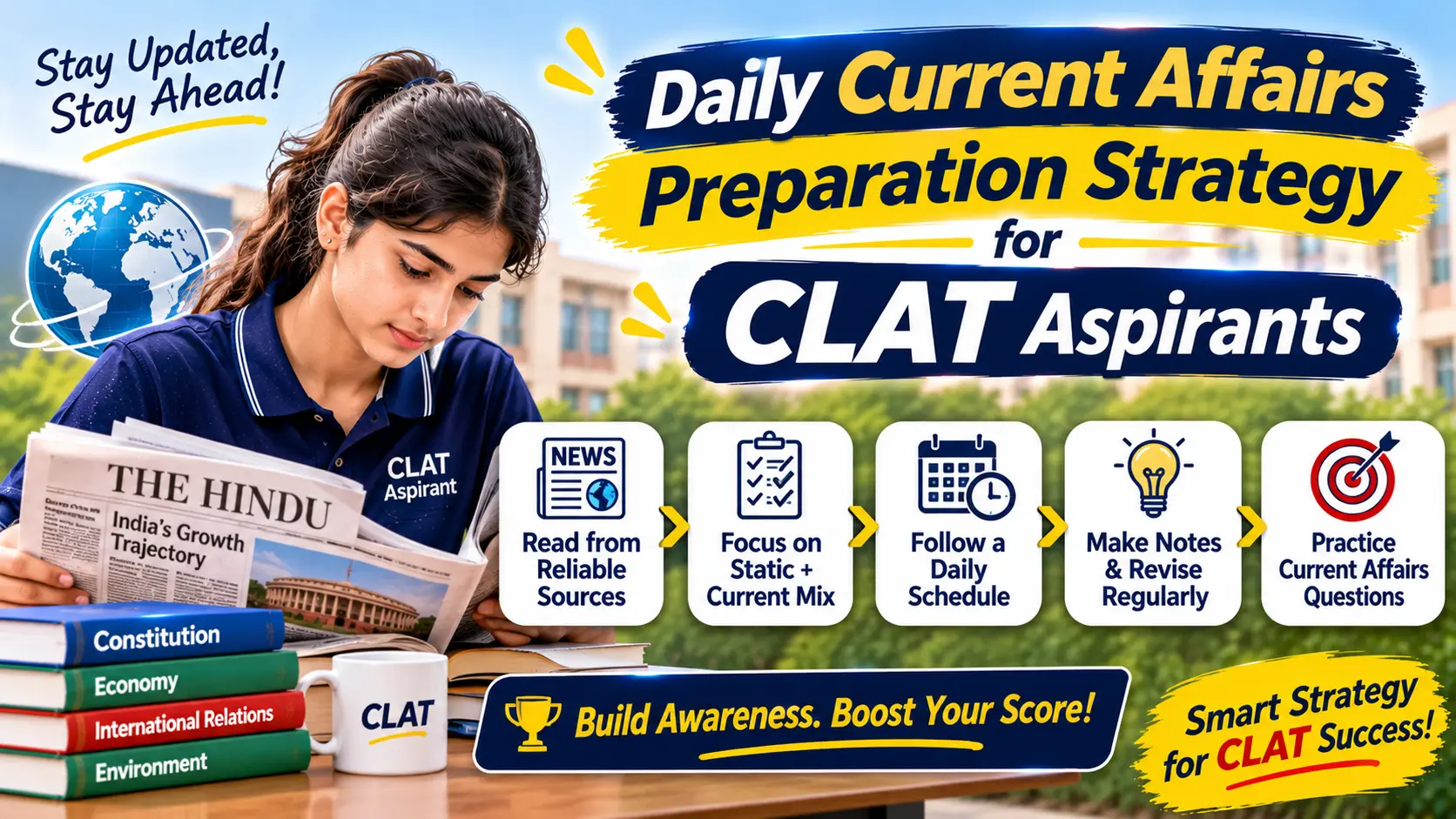
Daily Current Affairs Preparation Strategy for CLAT Aspirants
Current Affairs and General Knowledge play an important role in CLAT preparation. Students aspiring to secure admission to National Law Universities need to develop a habit of reading, understanding and analysing important national and international developments.
However, preparing current affairs is not just about memorising headlines, dates and personalities. CLAT aspirants must understand the background of important events and develop the ability to interpret information presented in passage-based questions.
Why Are Current Affairs Important for CLAT?
Current affairs preparation helps students understand important developments related to politics, law, international relations, economics, science, technology and the environment.
It also improves reading comprehension, analytical thinking and general awareness. These skills are useful when attempting passage-based questions in the examination.
Students should refer to the latest official CLAT examination instructions for the applicable syllabus and examination pattern.
Daily Current Affairs Study Plan for CLAT
A consistent daily routine can help aspirants cover important developments without feeling overwhelmed.
| Activity | Suggested Time |
|---|---|
| Newspaper Reading | 20 minutes |
| Understanding Important News | 10 minutes |
| Making Short Notes | 10 minutes |
| Current Affairs Quiz | 10 minutes |
| Revision of Previous Topics | 5–10 minutes |
Important Current Affairs Topics for CLAT
1. National Current Affairs
Follow important government policies, national developments, major public initiatives, important appointments and significant national events.
2. International Current Affairs
Understand international agreements, global summits, diplomatic developments, international organisations and important geopolitical events.
3. Legal and Constitutional Developments
Pay attention to important court judgments, constitutional developments, legislation, legal institutions and major changes in the legal system.
4. Economic Developments
Follow important economic policies, government budgets, financial reports, banking developments and major economic announcements.
5. Science and Technology
Stay updated about significant scientific discoveries, space missions, technological developments and digital innovations.
6. Environment and Climate
Read about climate conferences, environmental policies, biodiversity, conservation initiatives and important environmental agreements.
7. Sports, Awards and Important Appointments
Revise significant sports achievements, national and international awards, important appointments and major recognitions.
How to Make Effective Current Affairs Notes
1. Prepare Topic-Wise Notes
Organise information under categories such as national affairs, international affairs, economy, polity, environment and science.
2. Focus on Important Information
For every important event, understand what happened, who was involved, why it happened and why it matters.
3. Connect Current Affairs With Static Knowledge
For example, when studying a constitutional development, revise the relevant constitutional provisions and the role of the institution involved.
4. Avoid Lengthy Notes
Write short and meaningful points instead of copying complete newspaper articles. Concise notes are easier to revise.
Weekly and Monthly Current Affairs Revision Strategy
Daily reading should always be followed by revision. At the end of every week, revise important events and attempt short quizzes. At the end of the month, prepare a consolidated revision document covering significant developments.
- Revise daily notes every weekend.
- Attempt weekly current affairs quizzes.
- Prepare monthly topic-wise summaries.
- Revisit difficult topics after a gap.
- Practise passage-based questions.
Common Current Affairs Preparation Mistakes
- Reading multiple newspapers without a clear strategy.
- Memorising facts without understanding the background.
- Ignoring legal and constitutional developments.
- Making lengthy notes that are difficult to revise.
- Depending entirely on social media for information.
- Leaving current affairs revision until the final month.
How to Improve Your Overall CLAT Preparation
Current Affairs is only one part of CLAT preparation. Students should also practise English Language, Legal Reasoning, Logical Reasoning and Quantitative Techniques.
Explore the Pratham Online blog for additional CLAT preparation resources and study guidance.
You can also refer to the official CLAT instructions for examination-related updates.
Frequently Asked Questions
How much time should I spend on current affairs daily for CLAT?
A focused 45–60-minute daily session can be a useful starting point. Students should adjust the duration according to their reading speed, revision needs and preparation level.
How many months of current affairs should I prepare for CLAT?
Follow the current official syllabus and examination guidance. Develop a regular reading habit well before the examination and revise significant events from the relevant preparation period.
Is newspaper reading enough for CLAT current affairs?
Newspaper reading is important, but it should be combined with background research, concise note-making, quizzes and regular revision.
Should I make handwritten current affairs notes?
Handwritten and digital notes can both be effective. Choose a format that allows you to organise, update and revise information easily.
How can I remember current affairs for CLAT?
Use active recall, weekly quizzes, monthly revision and topic-based notes. Understanding the context of an event makes it easier to remember.
Conclusion
Preparing current affairs for CLAT becomes easier when students follow a structured daily routine. Focus on reliable sources, meaningful note-making, regular revision and passage-based practice.
With consistent preparation and the right guidance, aspirants can strengthen their general awareness and overall CLAT performance.